Monday, 27 January 2014

Dreams can certainly be more inspiring than facts: In defence of decent atheists


I had a dream recently where I found myself in a church; in some sort of general, relatively secular meeting. The vicar was an earnest man of substantial yet indeterminate age with surprisingly youthful vigour and a powerful sense of religious conviction. Though certain of his own opinions and attempting to persuade others of the correctness of his thinking it was not a faith borne of unquestioning adherence to dogma, more in the vein of a self-assuredness of his own self knowledge.

As is often the case with dreams my recollections are of a vague, almost shifting nature, though something left an impression upon me. The subject under discussion blurs away, the vicar encouraging me to attend his church on non-secular occasions and to engage in religious conversation with a likely hope of conversion.

I politely, but with a hint of condescension, deflect his invitations and enquiries and make my leave. What I am struck by is, for want of a better phrasing, his faith. I personally hold a number of ideas to be true that have led me to become an irreconcilable (but polite!) atheist. Such ideas on their own, used in trains of evidence-based argumentation can be as empirically and logically convincing as any argument but they can lack the dream that shone from that vicars’ eyes to make them truly compelling.

At present there is a vigorous ‘New Atheist’ movement making its voice heard in public discourse which I think suffers from a deficiency in persuasiveness as well as other flaws. Such names as Christopher Hitchens and Richard Dawkins spring to mind. The flaws in their approach lie not in the arguments they make for the non-existence of deities but the personal prejudices they conflate such arguments with and their lack of understanding of the need for facts to inspire new dreams.

For example, Christopher Hitchens, whist a fine raconteur with an encyclopaedic knowledge of religion that could blast any religious apologist out of the water was also excruciatingly blunt to the point of plain rudeness. In his later years he also appeared to focus all critiques of religion at one in particular whilst getting rather too cosy with some rather ‘hawkish’ neocons who were more than happy to utilise his influence to promote a rather questionable political agenda. As far as I am aware he also never appears to have debated with a woman which is something I would also allege of many of the other New Atheist crowd which is very much a boys’ club; and a white, straight, upper-class one at that.


Having been inspired by some of Hitchens’ works and his dry wit to discover much of his hypocrisy and slow decline into incoherent alcoholism I found particularly sad. Another prominent New Atheist, Richard Dawkins, is, I would argue, an excellent biologist but a poor philosopher and a terrible anthropologist. In the heady world of academia removed from the everyday experiences of human beings it is very easy to play intellectual football with ideas and poor scorn on those with which you disagree. It is quite something else when you put yourself forward as an ambassador for biology and atheism and then proceed to act like a total jackass!
I call Dawkins a poor philosopher because he often falls on crude socio-biological explanations of human behaviour. This matters; how human beings are viewed percolates through to political discourse and affects the nature of society. Self-aggrandising, rude comments about people’s religious beliefs can serve to act as a sounding board for existing prejudices and scapegoating.

On a purely pragmatic level viewing human beings as hard-wired shaven apes using overly reductionist sciences such as evolutionary psychology to explain our behaviour provides an inaccurate and incomplete picture of our nature, public policy derived from which is likely to create greater harm than good. 
You can, after all, no more describe a human being as ‘simply an ape’ than you can describe a Monet as some dried paint.

Dawkins' poor anthropological skills relate partly to the points above and also to his lack of understanding as to what religion actually is and what purpose it serves in human experience. It is one thing to argue that deities do not exist and quite another to be able to engage with the religious and open up a discussion about what future dreams we would like to weave for human societies that might indeed be preferable to the current mythologies that constitute much of their functioning apparatus.

I use the term 'dream' as the best definition as to what religion actually is I have come across is by the 20th Century anthropologist E. E. Evans-Pritchard:

“A system of symbols which acts to establish powerful, persuasive and long-lasting moods and motivations in men [ed. and women] by formulating conceptions of a general order of existence and clothing these conceptions with such an aura of factuality that the moods and motivations seem uniquely realistic.”


The points I make above are of course allegations and my own opinions, but there are wider issues at stake than the conduct of such individuals: I regard atheism [in the sense of a lack of belief in supernatural entities of any description and the conviction, based on evidence, that such entities are the products of human culture] to be of profound philosophical and moral importance. For clear discussion about such ideas a move needs to be made away from vitriolic shouting matches and the cult of personality to veins of enquiry much more of the vein of thinkers such as Raymond Tallis who wittily and humanely analyses arguments with the goal of seeking out truth.

If we do truly live in an atheist universe and religion in its many incarnations is a product of human cultural life (which fulfills genuine needs but much of which is potentially harmful to the individuals involved and surrounding society) it is quite reasonable that a debate be launched, or rather developed, about such issues and the promotion, potentially, of secular atheism. 
Currently there is nothing revolutionary about the ‘New’ Atheists and they offer no dreams with which we can work, we all deserve much better.

Sunday, 19 January 2014

Oh Joss...


This week I thought I would cover an issue that has been somewhat irking me, the uncritical adulation of a certain well meaning bald guy..

I thought I would remain silent on this issue for a while until the hype around the idea had subsided. Late last year, Joss Whedon, with some ceremony, as if some great revolutionary, said that he prefers the term ‘genderist’ to ‘feminist’. Now I like Buffy the Vampire Slayer and Joss is clearly no misogynist but there are definitely some problems here:

White, heterosexual, middle-class men have a relatively limited contribution to make to discourses about feminism. I generally would call myself a feminist, or supportive of it if the person I was talking to was uncomfortable with the idea of me being one. Joss, likewise, could quite reasonably do something similar. However, to stand up at some sort of televised address and redefine feminism on behalf of everyone is at best illegitimate or even just plain silly!
I write articles about things that interest me, Joss writes about things that interest him and turns them into TV shows and movies. We both lack any legitimacy to make such statements or to say we can redefine the issues.

To use the term ‘genderist’ is also to miss a vital point; gender-equality is not an inevitable state of affairs. Mr Whedon has an almost endearingly naive view of the nature of history; he talks in sweeping terms that we have now moved beyond racism, that it is of course abhorrent and that we now in turn need to do the same with gender relations. He dislikes the term feminism because it implies that "the idea of equality is just an idea and that it's an agenda". My response to that would be that of course it is an agenda, as was the movement to ban the trans-Atlantic slave trade, something about which many people were perfectly okay with at the time in many Western countries. It took a morality expanding effort on the part of the conscientious to achieve what was by no means an inevitable historical process. 

Feminism was and is a politically active social movement for equality and to put an end to various forms of subjugation. It has some problems such as the lack of consideration of many middle class white feminists to consider women of different ethnic backgrounds, class relations and cultures. There are also nuances and complexities such as the issue of intersectionality; a concept used to describe the ways in which different forms of social oppression  i.e. racism, sexism, homophobia etc. are interconnected and cannot be viewed in isolation from one another. The treatment of minority groups who are some of those most in need of representation within feminism such as trans women and sex workers illustrate well the need for greater reflexivity on such issues by some activists.

What is clear, however, is that Joss understands none of this and should politely be asked to sit down. 


Saturday, 11 January 2014

I cannot absolve myself of the need to write (and nor should you)!

An article from earlier this year finally got round to publishing, following on from my last post wishing you all a Happy New Year and my thudding reality:

I have been wondering of late whether people have more time to be creative in the present day than they were in the past and to what extent any greater creative potential available in the age of digital media communications is mitigated by the technologically induced attention deficit disorder it appears to induce.

My own creative urge is to write, though my skill at the craft [if it can be called that] varies wildly! I have at times lacked any inclination to do so, often for months, and when I have tried during these periods what results is stilted and hardly consequential. There are of course different types or forms of writing; I do not mean the ability to produce i.e. a technical article on request about a specific subject and this may just be a personal creative flaw of my own. However, if I am to write something interesting, which in my case are essays of one sort or another, I must first have been inspired. The difficulty is that I cannot choose when and how often I am inspired and by what.  Thought provoking ideas come in many forms; from a song I have heard for the first time, or indeed a thousand times, a work of art, a new place I have visited or fresh insights I have from a book, play or film.

None of the above are exactly revolutionary points but I can’t help but make them for there is something wonderfully strange about the process of, and the urge, to write creatively. If I find that I am inspired to put pen to paper I don’t have much time for the idea will dissolve unless I start to give it concrete form and develop it. I also do not know what overall point I am making, if any, until I have at least captured the initial spark in ink.

What has put some wind in my sails lately is that I have had more time to stop and think about things and to read/see a feast of literary and cultural delights. In my case this has been due to being unable to do a great deal due to a fractured vertebrae but whatever catalyst gets you started treat it as a silver lining and seize it with both hands!

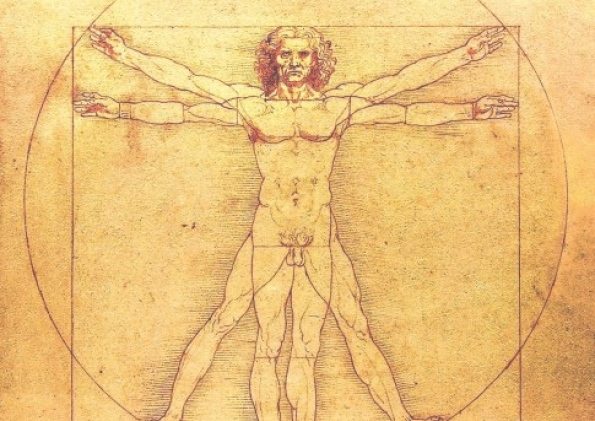
Yesterday, I was fortunate enough to see an exhibition of Leonardo Da Vinci’s anatomical drawings and notes; his artistry was extraordinary but nowhere near as much as his insights. Using only pen,  paper, his eyes, and I assume some very sharp implements, he was able to map the human body with extraordinary accuracy making insights about the function and mechanics of organs hundreds of years before anyone else. Some of his work could still be regarded as cutting edge in modern science. For example, he ingeniously took a wax cast of an ox heart and made a glass replica from it. He then poured water containing grape seeds through it and observed the swirling patterns, or eddies, the sand made as it passed through.  Somehow, he worked out that these currents play a role in closing the valves of certain parts of the heart to enable it to pass on to the next part, something scientists only worked out very recently. Tragically, this incredible work was only published in 1900 as it would have utterly transformed the study of anatomy in Europe centuries earlier than it has actually developed. That being said it is a small miracle we know of it at all, the only copy sat in a vault for centuries and could easily have been lost, only to be published centuries later.


It seems to be a tradition that older people think the world is somehow “going to pot” and that people are less well informed that they used to be, that journalism is dead and politics is corrupt. There have of course always been corrupt politicians, rubbish journalists or political propagandists who seek to destroy language (the phrase ‘U-turn’ appears to be their favourite missile at the moment) and there will always be some things wrong with the world. What is certainly not the case is that we are less well informed than any previous generation.

The internet, along with the rest of IT, has increased the ability of people to find out about new ideas dramatically. It has also democratised the forming and expression of opinion on any subject imaginable hugely. This has meant that a substantial proportion of the internet is dedicated to subject matters of debates which are not necessarily interesting or important; who after all in their right mind (over the age of 12) really cares what Justin Beiber is doing!

I think that we get a rather stratified and distorted view of the past. Though far fewer people were able to be creative in a way that could be recorded; aside from no internet, most people were too busy just surviving to write a sonnet and may well have been ignored or even persecuted had they managed to do so. For every Milton and Keats we know of there may well have been dozens more whose work has simply not survived or who have been marginalised to the point of being forgotten, as many we do remember i.e. Keats very nearly were. There will also of course have been a great many more writers, poets, musicians, scientists and other creative types who were simply not very good!

This is the point I think people miss,  that no one will know or care who Justin Bieber or Miley Cyrus are in 20 years. In 20 years there will be just as many new, unmemorable and talentless people who will in turn be forgotten. We will of course be left with a permanent digital reminder of Bieber et al. thanks to modern technology. However, there is vastly greater opportunity for talented people not to be missed, or even just to have the chance to be creative in the first place and I think that is a price well worth paying. 


Reality came crashing down with a thud


Happy New Year!


An indeterminate period of time ago I wrote an introductory piece to revamp and reboot a little project of mine, this blog. Unfortunately, as ever, life gets in the way of living bit after my call to “down your coffee, grab a pen and join me on a whirlwind tour of intellectual possibilities!” I somewhat petered out. 

I have, however, for not all too positive reasons, been able to get my nose back to the grindstone and get some [hopefully] interesting writing done for my readers, some of whom, fingers crossed, may exist outside of my imagination. What stalled my regular life and reinvigorated my creative impulse was an unfortunate altercation I had with a spiral staircase with a handy pillar at the bottom. Unsurprisingly I came second and managed to fracture one of my neck vertebrae. Needless to say I have in fact been very lucky, no permanent damage was done and I am able to write this, neither of which were inevitable outcomes. I am extremely grateful to everyone for the help I have received and have tried to negotiate the difficulties such a situation presents with a good sense of humour, a healthy dose of bloody mindedness and ample patience.

A couple of days prior to my altercation I was writing some whimsical poetry in the mad coffeehouse atmosphere that is the Edinburgh Fringe during which I found myself asking that basic philosophical question, ‘is reality actually happening?’. I have often found that need to pinch myself to check that the incredible cacophony of experience known as reality is actually occurring and is not just some sort of dream. I would argue that such musings are made a great deal easier by having the necessities of existence readily provided by one’s circumstances i.e. knowing where your next meal is coming from. It seems that things most often seem to take on more of an air of sublime unreality when life’s essentials, at least temporarily, are satiated.

The answer to this type of question seems a lot clearer since losing my footing and receiving a thorough slapping from the combined effort of stairs, gravity and a pillar when reality came crashing down with a thud. There is of course the very small possibility that we are all living in the Matrix, that we are brains in jars in some alien’s experiment or that certain aspects of reality may be unknowable to us. Personally, I am content to accept the empirical pillar shaped reality in front of my eyes and leave such thoughts to better philosophers [i.e. A.J. Ayr in ‘the problem of being’].

What I am quite sure of, aliens and existentialist thoughts aside is, that with one slip, my easy happy little life could have escaped me and this has very much brought my intellectual lenses into focus.


With this in mind, and my enforced extra reading time, I can hopefully produce some thought provoking, relevant and above all interesting articles for you to read. I do hope you enjoy and feel free to comment!

Wednesday, 20 March 2013

The epistemology of certain ideas

Hello and sorry for the delay in this new bout of posts, my renewed enthusiasm for blogging was countered by the unfortunately pressing demands of the everyday.
I thought I would start with a general post which goes over some of my old ground:

The epistemology of certain ideas

It would appear to me that though we have the capacity to be better informed than any generation that has preceded us with a wealth of information at our proverbial fingertips that this has not necessarily translated into a greater amount of critical scholarly work. I am of course making vast sweeping generalisations which would need to be qualified when talking about any given subject in a particular context. However, even some general observations can, I think, yield some fruit.

One of my own main areas of interest is the extent to which the role of available energy to a society can be used to explain aspects of its nature. A number of theories have been put forward by different thinkers who make different assumptions.  For example, Richard Heinberg in 'The Party's Over; Oil, War and the Fate of Industrial Societies' does a splendid job of using the role of energy as a means of explaining the parameters within which socio-economic complexity can exist and the level at which this can be maintained.
To very crudely paraphrase his line of argument; Europeans, having utilised all of the resources within their area moved further afield to increase the net energy available to their society, colonising other parts of the planet and continued this trend with the advent of the industrial revolution [p.47-52]. It has been argued equally persuasively by Nicole Foss (a.k.a. 'Stoneleigh' of the finance site 'The Automatic Earth') that if the net level of energy available to a society decreases then there is likely to be a reduction in the level of socio-economic complexity that that society can sustain.

Both of these ideas can serve as a functional explanation for the nature of the development of some societies; as to whether either of them are true or not depends on the evidence the author has to support their argument. If an analysis of the role of energy in societies serves as a tool to shed light on the nature of human affairs, rather than being used to provide a total explanation for them, it can serve as a useful frame of reference with which to theorise. If, however, it is taken to explain everything you end up in the situation Karl Popper so elegantly described that "something that tries to explain everything ends up explaining nothing".

Unfortunately, the none too revolutionary assertion; that most theory (particularly in the social sciences) can help explain only one aspect of reality, providing it is at least a semi-accurate representation based on evidence, appears to be lost on many people.  
From my experience of many discussions about i.e. climate change I have seen online it appears to me that many people think that X or Y simply explains the nature of events, combined with the rather painful lack of consideration as to whether the person articulating a view is someone that should actually be taken seriously. Anyone can of course have an opinion on a subject, however, if it is 'Lord' Monckton talking about climate change it is about as trustworthy a source of information as relying on my expertise to fix a space shuttle. If, however, you are talking to a scientist or historian who has been subject to extensive peer review and who widely discusses their ideas there is some chance that their opinion is based on factual evidence without substantial compromising factors such as astounding ignorance of a subject or receiving back handers from vested interests.

I raise this issue as aside from intellectual laziness being a personal bugbear bad philosophy can have dangerous consequences. Dimitri Orlov, in his excellent blog, 'Club Orlov' raises such a point with reference to the work of Hobbes and its interpretation since:

"This misinterpretation of facts directly observable from nature has led to the faulty Hobbesian justification of the economic appetite as something natural and evolved, and therefore inevitable, giving rise to the conjectured laws of the marketplace, which in turn favour non-empathic, exclusionary, brutal, possessive individualists. The result has been to enshrine mental illness—primitive, pathological, degenerate narcissism—as the ultimate evolutionary adaptation and the basis of the laws of economics. Thus, an entire edifice of economic theory has been erected atop a foundation of delusion borne of a misunderstanding of the patterns present in nature."

Such a socially Darwinistic or Hobbesian vein can be seen in speeches given by political leaders in the wake of the 'neoliberal' era which can lead to political fights against ideas such as the 'Working Time Directive', the dastardly piece of legislation coming from unaccountable Brussels which provides at least a basic benchmark of employee rights to minimise their exploitation. This is claimed in the name of individual liberty (in public anyway) when the end result is often something more like this

That theorisation is often composite, and every representation of reality is subjective to some degree I would not think is too controversial as an assertion; in most modern histories they are titled  'A' history rather than 'THE history of X' to acknowledge this point. In spite of this not all perspectives are equally valid, or true, (there, I said it!) and though the world has become an immensely complex place we are now better situated than ever to take a multidisciplinary approach to issues and consider critically a range of perspectives in order to get a more accurate picture of the greater whole. Such thinking I would argue is now more essential than ever before with a complex set of interlocking challenges facing society over the coming decades, from economic stagnation and decline to deforestation and rapid human induced climate change. In order to address such issues we need to take into account 'the biggest possible big picture and consider a range of subjects in any discourse, rather than blaming global warming on a government conspiracy or assuming a single technological fix can solve all of the world's problems.

Friday, 23 November 2012

Housekeeping Update

Hello and welcome to Cora's world.

Things have changed somewhat since I started this blog, it has been a somewhat sporadically updated over the time that I have had it open.  I have done another degree in the meantime and there are a number of things that have been on my mind of late, a number of parallel sets of interest which may yet well collide and entangle into interesting wider narratives.

I will be publishing referenced posts on a much more regular basis, updating them into themes and
seeing where these ideas interrelate and what fruit develop. This somewhat sporadic set of ideas include...

The philosophical roots of anthropology
Feminism
The nature of the human condition
The role of energy in human affairs
Economic contraction and collapse
Humanism
The use of horticulture for social justice


So... down your coffee, grab a pen and join me on a whirlwind tour of intellectual possibilities!

Sunday, 18 September 2011

Green thoughts of an anthropological intern

[Below is a piece I have written for a charity called 'Green and Away' who run a conference centre for groups to use in tents every summer. I was an intern for the organisation over the summer and have written the below piece for the organisation for one of their publications.]

During my time at Green and Away I have learn a great deal both about ecological matters and myself and I thought I would share some thoughts with you all from the perspective of anthropology on what my time as an intern has taught me, and the lessons I think that Green and Away can offer wider society:


I have always been interested in animals ever since I was a kid; I was fascinated by how they lived and how they always seemed so sure of what they were meant to do. As I got older, a regular theme kept cropping up that would spoil my viewing, that whichever amazing creature I had spent the past half hour enjoying watching was in imminent danger of being persecuted into oblivion by humans! Aside from spoiling my program it left me with a mildly misanthropic view of my fellow humans as seemingly incapable of living around other wildlife without exploiting the environment at the expense of all else. 

The enjoyment I gained from seeing all of the wonderful life around me and the thought of it not being around for others to enjoy spurred me on to pursue a career where I could do something help prevent this. Not being the most adept scientist in the world, I decided to study anthropology (the study of humans) at university to understand better the one species causing all this destruction, our own. Over the course of my degree I have gone from thinking that there is something inherently wrong with or destructive about human nature to thinking, as time has gone on, that, somewhat unsurprisingly there is a little more going on!

This mainly seems to revolve around the fact that, if any one thing can be said to differentiate humans from other species, it is that we often question what it is we are supposed to do. We ask ‘why?’ constantly, something that not even a remarkably intelligent animal such as a chimpanzee does. 


[I should also add something else that I have learnt; that it is not people per-se who wreak ecological havoc wherever they go but more certain societies with some defining characteristics]

People are also capable of doing something else extraordinary; we are capable of going beyond our immediate social groups and forming larger scale, more complex societies, I’m not talking ant hills either here! Some animals, such as bees and ants, live in very complex social groups with individuals having socially specific roles much in the way that people do in human societies. This is as far as the analogy goes though, for human social organisation is something truly new, it is truly cultural. With the advent of language and complex tool use we were able to form ideas to describe the world in which we lived and innovate new and different forms of society with different tools, modes of living and different ideas that were used to explain the way that the world works.


We human beings are only capable of forming a familiar social group of up to around 500 people, which for the majority of human history represented the maximum number of people you were ever likely to meet. That we human beings are capable of going beyond our immediate social groups and forming larger scale, more complex societies fascinates me. As societies have become more complex with the development of new crafts and technologies, which led to the use of agriculture, fiefdoms, trade etc. these communities have coalesced into larger, more complex societies.

The word ‘community’ can have a number of different meanings depending on the context in which the word is used, in this context, that of a social group of an individual, I will talk of community as having ‘four key qualities’:

  • A smallness of social scale
  • A homogeneity of activities and states of mind of members
  • A conscious of distinctiveness
  • A self-sufficiency of needs through time.
All societies have a set of ideas that form their worldview and provide the framework within which people think about the world and organise their activities. For most of the time we have been around these ideas were those of a community; the myths of a tribal group or small village of people that informed their worldview. However, since we have moved beyond the limits of our immediate social group and formed larger, more hierarchical societies communities of people are subsumed into a larger group with an ideology. 
Separating out and categorising this ideology has had many an anthropologist in their office till 4am pulling their hair out and sobbing into their desks as most societies don’t categorising ideas into neat subject areas like economics, politics, religion etc.

Fear not! Help is at hand, (bear with me), in the form of a general definition of the myths that define a society as: “A system of symbols which acts to establish powerful, persuasive and long-lasting moods and motivations in people by formulating conceptions of a general order of existence and clothing those conceptions with such an aura of factuality that the moods and motivations seem uniquely realistic.”

Though this definition seems rather waffly it provides a good framework with which to think about the ideas that underpin and run a society like our own. As societies have become more complex, there have been both positive and negative effects; new technological innovations have enabled people to carry out tasks more efficiently and, for example, grow more food keeping the threat of starvation at bay. Advances in our knowledge of subjects such as healthcare have also led to a substantial increase in the human lifespan and the health of the general population. At the same time as these successes there have been vast and needless losses of life in wars, exploitation of some groups of people by others and a great deal of damage done to the ecology that we depend upon for our survival; what we really need to aim for is 'Mozart without the mushroom cloud'.
  
What has enabled this expansion are the ideas that underpin a society, the mythology upon which it bases its identity. 

At this moment elephants are harassing buffalo to gain access to a waterhole in the Congo Rainforest, people from a tribal group in West Papua are protesting the destruction of their land by multinational companies whilst they are under foreign occupation, and traders on the New York Stock Exchange are running around in a Western Equivalent of a rain dance invoking the ‘market’ to provide. 

Apparently, we currently live in the 'Modern Age'. We do of course just happen to live during a certain period of time, the idea of a time period constituting an age of any sort being a human construct. Modernity, as our ’era’ is labelled is of course an idea, one which is central to the ideas underpinning Western society.

Western society is not unique in having done damage to the ecology of the planet, or in leading to wide scale exploitation of some groups of people by others. It is unique though in the sheer scale of the damage caused. Since the industrial revolution, the economic system of capitalism in its various guises has provided a remarkably productive system of generating material wealth, technological innovation, and intellectual discovery but it has done so at great social and environmental cost. The collection of ideas that have led to our current malaise are varied both in terms of origin and the intentions behind them. 

Classical economic theories, such as David Ricardo’s idea of comparative advantage for example, have been very effective in creating much of the modern economy that we know and enjoy today. These ideas whilst leading to an efficient economy with relatively cheap goods and services do not, generally, factor in where these resources come from, the welfare and rights of those who produced them or that there might be limits to the extent to which an economy can grow. 

The result of these ideas has combined to make a very toxic brew of ecologically destructive consumerism that does little to nothing to alleviate poverty. It is in this wider landscape of ideas that the major trends that will affect our lives are emerging; A decline in the availability of cheap fossil fuels, the likely decline, or possible collapse of global trade and finance, a loss of biodiversity and climate change.

Green and Away has given me fresh insights into what is required to create a cultural response that addresses what amounts to a crisis of ecological proportions both in practical adjustment in our day-to-day living and to tackle the root cause of our problems. Coming to Green and Away I have experience a way of living (with modern amenities) that is very different to the hum drum suffocating miasma of retail parks, motorways, wall to wall advertising and wilting saplings of the post-industrial consumerist British landscape.

One of our largest problems is that we suffer a disconnect between a sense of community, within which we are personally limited to a fairly small group of people, and an economic system that delivers large material rewards but that is socially and ecologically destructive. 
A pressing question in answer to this is how we maintain the aspects of ‘modernity’ that we appreciate and would not want to do without like electricity and modern healthcare whilst regaining a sense of community that, as I have discovered, is so valuable to our wellbeing. Community-based living also provides a more ecologically sensible way of running a society i.e. we used a fraction of the resources per person at Green and Away that are used in a conventional home.

The idea that there can be an ever-growing economy and that indeed there MUST be in order to maintain our standard of living is central to our current economic system; that this is an ecological impossibility by the non-too revolutionary observation that the world is of a finite size and that resources are limited directly contradicts this idea. I should add here another observation from anthropology that though not a very cheery thought is well worth remembering. It is that societies can and have collapsed when their systems of social organisation ran head long into an ecological wall as the myths upon which their worldview was based did not correlate with reality.

This is no call for pessimism however; The very fact that our problems are essentially a problem of ideas makes them eminently changeable. It is after all one of the things that makes us human, that we have ideas, and that we can have new ones!

Whilst I worked in the light industrial area, I found an organisation where technologically we were just as happy to use solar panels and second hand tents together, using technology appropriately for purpose rather than being fixated on the new. We had well-organised management at the same time as an holistic ethos and managed our resources at both ends of the dietary cycle with ecological consideration. Green and Away is able to put together an organic community within the framework of a specific agenda that serves an economic and educational purpose whilst remaining flexible and adaptable, which, I might add, is no small achievement!


The solutions to our problems, will require context specific answers that address the social needs of groups of people without wrecking the ecology upon which we all so dearly depend. This will require the work of people at all levels of society all helping in their own way as we rethink the stories that we tell ourselves about the way that the world works. At this stage in 'the game' many of the current power structures are collapsing under their own weight, or at least becoming less relevant and useful to our everyday lives. The ensuing malaise, though not straightforward, can provide a window of opportunity in which to develop more ecologically sane and morally humane structures within which to operate human society of which Green and Away offers a fine example.